


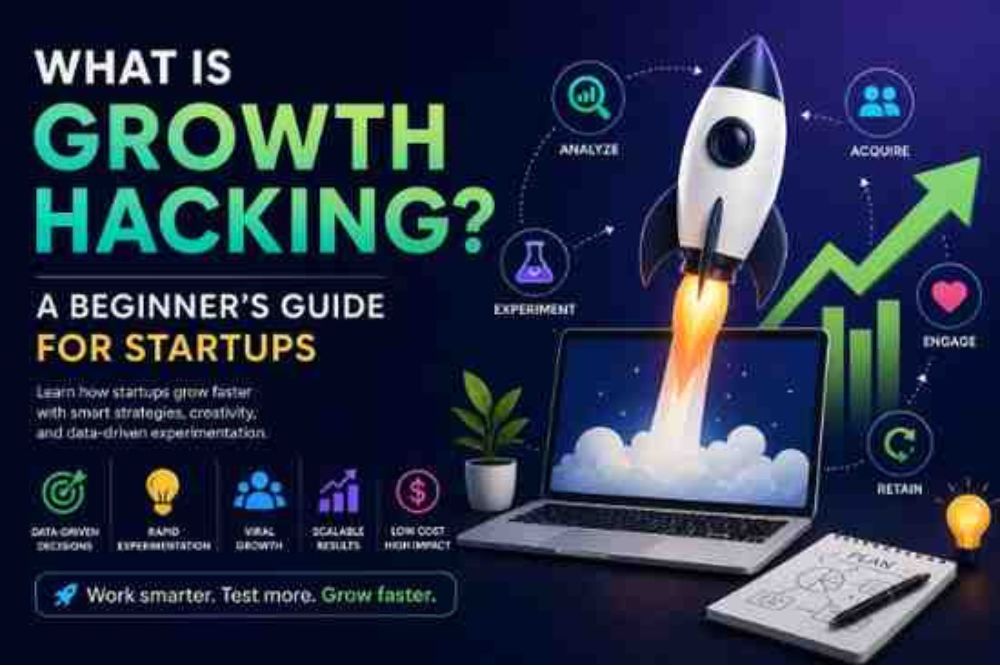
Startups often face a common challenge—how to grow quickly with limited resources. Unlike large businesses with massive marketing budgets, startups need smart, creative, and cost-effective ways to attract users and increase revenue. This is where growth hacking comes in.
Growth hacking is a strategy focused on rapid business growth through experimentation, creativity, data analysis, and low-cost marketing techniques. It combines marketing, product development, analytics, and customer psychology to find scalable growth opportunities.
For startups, growth hacking is not just a trend—it is often the foundation of early business success.
Why Growth Hacking is Important for Startups
Traditional marketing can be expensive and slow. Startups usually need faster results while working with smaller budgets. Growth hacking helps businesses test ideas quickly and identify what drives growth.
Benefits of growth hacking include:
- Faster customer acquisition
- Lower marketing costs
- Better user engagement
- Improved retention strategies
- Scalable business growth
Instead of spending heavily on advertising, startups focus on strategies that deliver maximum results with minimal investment.
Key Elements of Growth Hacking
1. Data-Driven Decision Making
Growth hackers rely on analytics to understand customer behavior. They track metrics such as traffic, conversions, bounce rates, and retention.
Important metrics include:
- Customer Acquisition Cost (CAC)
- Conversion Rate
- Lifetime Value (LTV)
- Churn Rate
Data helps businesses make informed decisions instead of guessing.
2. Rapid Experimentation
Growth hacking is built on testing. Businesses constantly experiment with different marketing strategies to see what works best.
Examples include:
- Testing landing page designs
- Trying different email subject lines
- Running A/B ad campaigns
- Experimenting with pricing models
Small tests can lead to major growth opportunities.
3. Viral Marketing and Referrals
Many successful startups grow through word-of-mouth marketing. Referral programs encourage users to invite others in exchange for rewards.
Popular growth tactics:
- Referral bonuses
- Shareable content
- Social proof
- User-generated content
This helps startups acquire users organically.
Popular Growth Hacking Strategies
Content Marketing
Publishing SEO blogs, videos, guides, and case studies attracts organic traffic and builds authority.
Email Marketing Automation
Automated emails nurture leads and improve conversions.
Social Media Growth
Leveraging trending content, influencer collaborations, and short-form videos boosts visibility.
Product Optimization
Improving onboarding, user experience, and retention increases long-term growth.
Examples of Growth Hacking Success
Many global companies used growth hacking in their early stages. Referral systems, freemium models, and viral campaigns helped startups scale rapidly while minimizing costs.
These strategies show that growth is not always about spending more—it is about experimenting smarter.
Final Thoughts
Growth hacking is a powerful approach for startups aiming to grow faster with limited resources. By combining creativity, analytics, experimentation, and customer-focused strategies, businesses can unlock scalable growth opportunities.
For startups, growth hacking is not about shortcuts—it is about finding efficient ways to build momentum and achieve sustainable success.


