


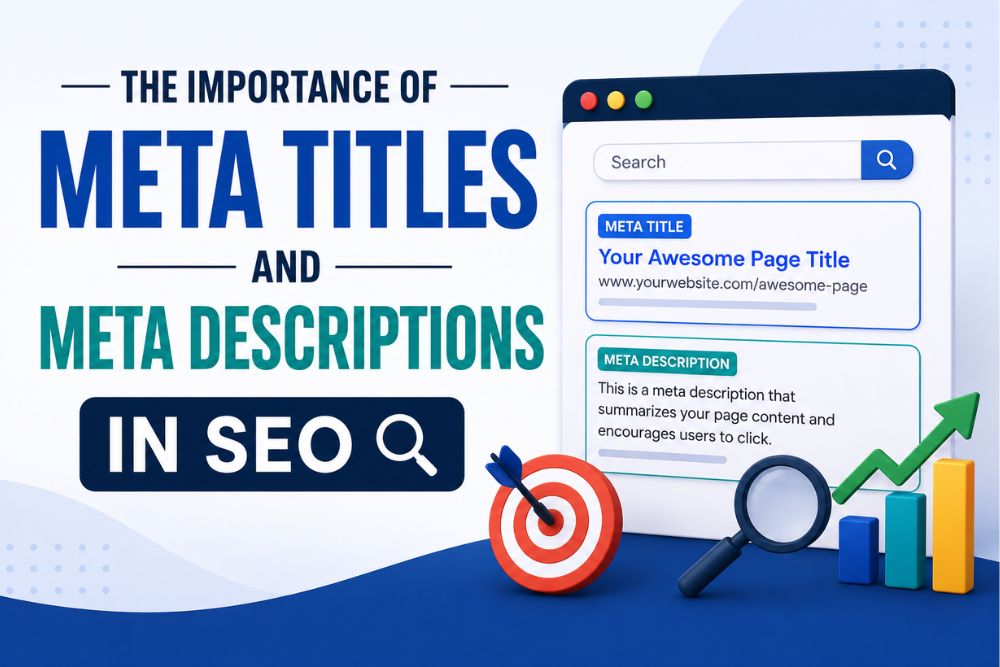
When it comes to Search Engine Optimization (SEO), every detail matters—including your website’s meta titles and meta descriptions. These elements may seem small, but they play a significant role in helping search engines understand your content and encouraging users to click on your website in search results.
A well-crafted meta title and meta description can improve your website’s visibility, increase click-through rates (CTR), and enhance the overall user experience. While they don’t directly guarantee higher rankings, they influence how users interact with your content, making them an essential part of any successful SEO strategy.
What Are Meta Titles?
A meta title (also called a title tag) is the clickable headline that appears in search engine results and browser tabs. It gives users and search engines a clear idea of what a webpage is about.
Example:
The Importance of Meta Titles and Meta Descriptions in SEO
A good meta title should:
- Clearly describe the page content
- Include the primary keyword naturally
- Be unique for every page
- Encourage users to click
- Stay within 50–60 characters to avoid truncation
What Are Meta Descriptions?
A meta description is a brief summary of a webpage displayed below the title in search engine results. It helps users understand what the page offers before they click.
Example:
Learn why meta titles and meta descriptions are essential for SEO. Discover best practices to improve website visibility and increase click-through rates.
A good meta description should:
- Summarize the page accurately
- Include the focus keyword naturally
- Be compelling and informative
- Stay within 150–160 characters
- Include a call to action when appropriate
Why Are Meta Titles and Meta Descriptions Important?
1. Improve Search Visibility
Meta titles help search engines understand the topic of your webpage. Including relevant keywords makes it easier for search engines to match your content with user searches.
2. Increase Click-Through Rate (CTR)
Even if your page ranks well, users may ignore it if the title or description isn’t engaging. Well-written metadata encourages more people to click your website instead of competitors.
3. Enhance User Experience
Clear and descriptive metadata helps users quickly determine whether your content answers their questions, leading to better user satisfaction.
4. Support On-Page SEO
Optimized meta titles and descriptions complement other on-page SEO elements such as headings, URL structure, and quality content, creating a stronger overall optimization strategy.
5. Strengthen Brand Recognition
Including your brand name in meta titles—especially for key pages—can improve trust and recognition among users searching for your products or services.
Best Practices for Writing Meta Titles
Follow these tips to create effective SEO-friendly titles:
- Include your primary keyword near the beginning.
- Keep titles between 50–60 characters.
- Make every title unique.
- Clearly describe the page content.
- Use action-oriented and engaging language.
- Avoid keyword stuffing.
Good Example: SEO Content Writing Tips for Higher Google Rankings
Best Practices for Writing Meta Descriptions
To create compelling meta descriptions:
- Keep them within 150–160 characters.
- Use your primary keyword naturally.
- Explain the value of the page.
- Encourage users to click with action words like Learn, Discover, or Find out.
- Make each description unique.
Good Example:
Discover proven SEO content writing tips to improve rankings, increase organic traffic, and create content that attracts more visitors.
Common Mistakes to Avoid
Avoid these common SEO mistakes:
- Duplicate meta titles across multiple pages
- Missing meta descriptions
- Keyword stuffing
- Titles that are too long or too short
- Misleading descriptions that don’t match the content
- Generic titles such as “Home” or “Untitled Page”
How Meta Titles and Descriptions Help AI & LLM Search
Modern search experiences powered by AI and large language models (LLMs) use multiple signals to understand and summarize web content. Clear, descriptive meta titles and meta descriptions help reinforce your page’s topic and improve consistency between your metadata and on-page content.
To optimize for AI-driven search:
- Write titles that clearly reflect the page’s main topic.
- Use natural language instead of forcing keywords.
- Ensure the meta description accurately summarizes the content.
- Match headings, metadata, and page content for consistency.
- Focus on helpful, user-first information rather than search engines alone.
Quick Checklist
Before publishing a page, make sure you:
- ✅ Include the primary keyword in the meta title.
- ✅ Write a unique meta description.
- ✅ Stay within recommended character limits.
- ✅ Clearly describe the page’s content.
- ✅ Encourage users to click naturally.
- ✅ Avoid duplicate metadata.
Frequently Asked Questions (FAQs)
1. What is a meta title in SEO?
A meta title is the clickable headline displayed in search engine results that tells users and search engines what a webpage is about.
2. What is a meta description?
A meta description is a short summary of a webpage that appears below the title in search results and helps users decide whether to click.
3. Do meta descriptions affect SEO rankings?
Meta descriptions are not a direct ranking factor, but they can improve click-through rates, which may positively influence overall search performance.
4. How long should a meta title and meta description be?
A meta title should generally be 50–60 characters, while a meta description should be 150–160 characters to reduce the chance of being truncated in search results.
5. Why should every page have unique meta titles and descriptions?
Unique metadata helps search engines better understand each page, avoids duplicate content signals, and provides users with accurate information about what each page offers.
Conclusion
Meta titles and meta descriptions are small but powerful elements of an effective SEO strategy. They help search engines understand your content, improve visibility in search results, and encourage users to visit your website.
By writing clear, keyword-focused, and engaging metadata, you can improve click-through rates, support your overall SEO efforts, and create a better experience for both users and AI-powered search systems.


