


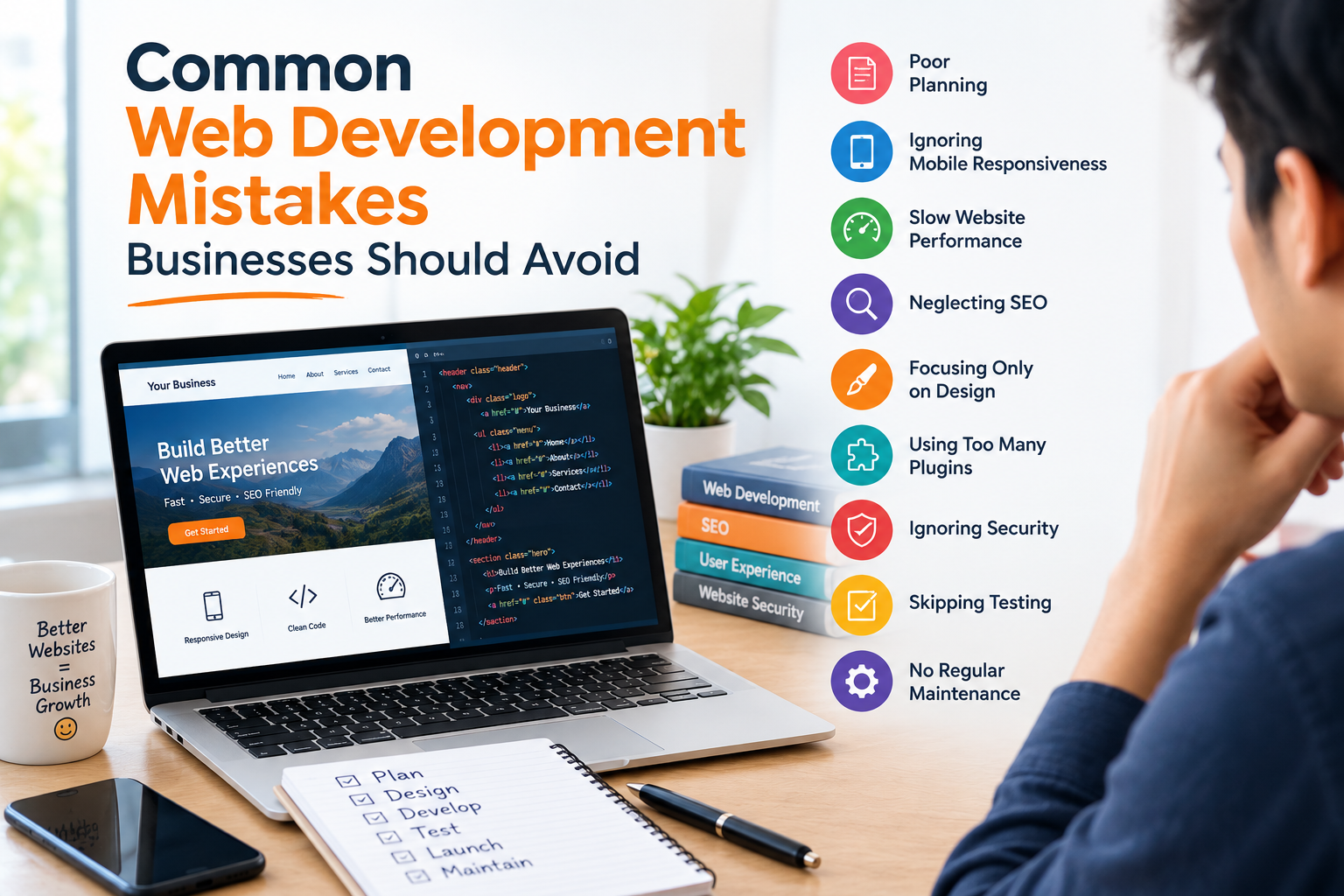
A professional website is an important digital asset for every modern business. It helps attract customers, build credibility, showcase products or services, and generate enquiries. However, simply having a website is not enough. Poor web development decisions can affect website speed, SEO, security, user experience, and conversions.
Understanding common web development mistakes can help businesses build websites that are effective, secure, and easy to use.
1. Poor Website Planning
One of the most common web development mistakes is starting without a clear plan. Businesses should define their target audience, website goals, required pages, features, and conversion points before development begins.
A clear website structure helps developers create better navigation and reduces unnecessary changes during development.
2. Ignoring Mobile Responsiveness
Many users access websites through smartphones. A website that works well only on desktop devices can provide a poor user experience.
Responsive web development ensures that content, images, buttons, menus, and layouts adjust properly to different screen sizes.
Businesses should test their websites on mobile phones, tablets, and desktops before launch.
3. Having a Slow Website
Website speed is important for both users and search engines. Large images, unnecessary plugins, excessive scripts, and poor hosting can make a website slow.
Businesses can improve website performance by:
- Compressing images
- Using optimized image formats
- Reducing unnecessary scripts
- Using caching
- Choosing reliable hosting
- Optimizing website code
A faster website can provide a smoother browsing experience and reduce user frustration.
4. Neglecting SEO During Development
SEO should not be considered only after a website is completed. Web development and SEO should work together from the beginning.
Important SEO elements include:
- Proper heading structure
- SEO-friendly URLs
- Page titles and meta descriptions
- Mobile responsiveness
- Fast loading speed
- Internal linking
- Image alt text
- Search-friendly website structure
Building an SEO-friendly website from the beginning can make future optimization easier.
5. Focusing Only on Design
A visually attractive website is useful, but design should not come at the expense of usability.
Complicated navigation, excessive animations, unclear buttons, and crowded layouts can make it difficult for visitors to find information.
A good business website should have simple navigation, readable content, clear calls to action, and consistent design.
6. Using Too Many Plugins
Plugins can add useful features, especially when using platforms such as WordPress. However, unnecessary plugins can increase website complexity and may affect performance or security.
Businesses should use only essential plugins and keep them updated. Before installing a plugin, check whether it is actively maintained and compatible with the website.
7. Ignoring Website Security
Website security is essential for protecting business information and customer data.
Common security issues can occur because of weak passwords, outdated software, insecure plugins, or poor access control.
Businesses should use HTTPS, strong passwords, regular backups, software updates, and limited administrator access to improve website security.
8. Forgetting Website Testing
Launching a website without proper testing can result in broken links, incorrect layouts, form errors, and mobile display problems.
Before launching, businesses should test:
- Contact forms
- Navigation
- Buttons and links
- Mobile responsiveness
- Page speed
- Images
- Browser compatibility
- SEO settings
A proper pre-launch checklist can help identify problems before customers encounter them.
9. Not Maintaining the Website
Website development does not end after launch. Websites require regular updates and maintenance to remain secure and functional.
Regular maintenance can include software updates, security checks, backups, broken-link checks, performance optimization, content updates, and form testing.
Conclusion
Avoiding common web development mistakes can help businesses create websites that are fast, secure, mobile-friendly, SEO-friendly, and easy to use.
Good planning, responsive design, optimized performance, strong security, proper SEO, regular testing, and ongoing maintenance are all important for a successful business website.
Instead of focusing only on how a website looks, businesses should consider how effectively it serves users and supports long-term business goals.


